News
Machine learning, minus the guesswork
18 Aug 2026
 Machine learning has been showing promise for seismic processing for years. Often it arrives as an isolated black box: powerful at that one task, but hard to understand, harder to reproduce consistently, and sitting disconnected from the whole processing chain. You feed it data, you get a result, works that one time but can’t be actually deployed. We took a different route with Reveal ML.
Reveal ML is a suite of machine learning capabilities built into our Reveal processing and imaging software. It gives you a growing set of tools that put machine learning to work on real processing problems, and you don't need to write a line of code to use them. It is user-ready, runs at scale, and sits right within production flows. If you can run Reveal, you can run these.
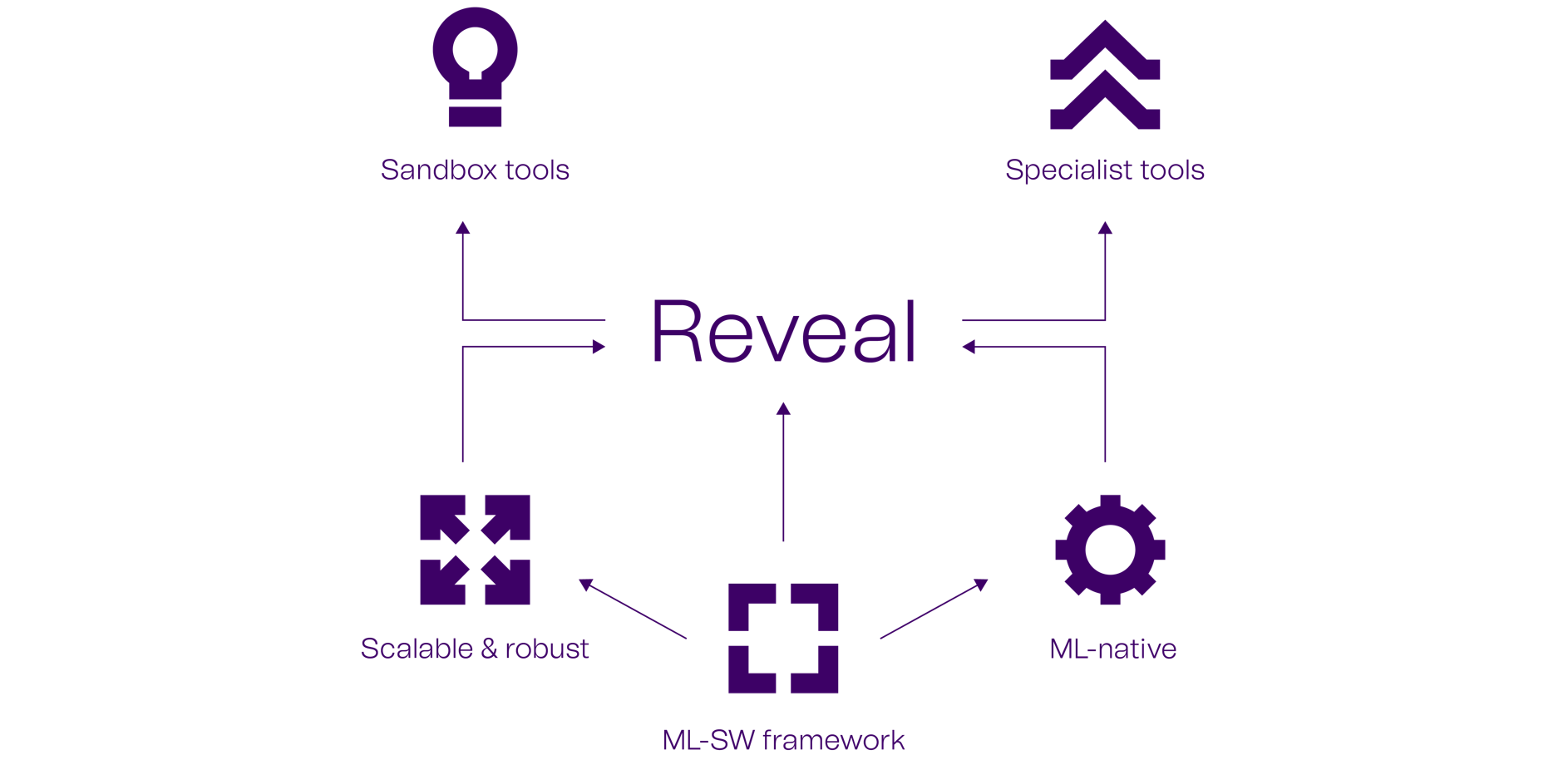
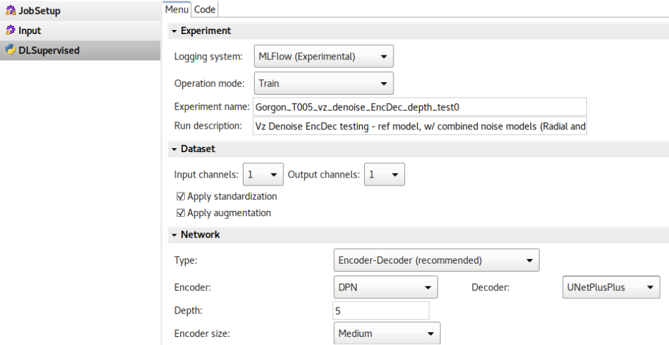
We also took a bold approach by giving users a ‘sandbox’ environment for ML, meaning a user can set up ML training for their own specific problems – and deploy them right away for inference at scale. This, of course, in addition to single-task tools our users are familiar with. You'll find the impact of Reveal ML where the hard problems are: complex deghosting, data-driven denoising, swell noise removal, adaptive subtraction, segmentation, post-imaging processing. Your own trained models, fit for your own problems, applied inside your normal workflow, solving new challenges or doing the kind of work that used to eat days.
That's the part we're most pleased with. Machine learning in seismic often assumes you've got a research team and time to spare. Reveal ML doesn't. A processor can pick up a tool and apply it the same way they'd reach for any other process in Reveal. The machine learning sits alongside the conventional toolset, not off in a separate world you have to context-switch into.
Built on solid ground
Under the tools sits MLSW, our proprietary machine learning framework built from the ground up. It prepares the data, trains the models with tens of modular architectures (including 3D convolutions), and keeps track of them, and it's what the tools are built on. That tracking matters more than it sounds, it is true MLOps delivered within Reveal: experiments, metrics and trained models are logged and registered as you go, so a result you get today can be reproduced or benchmarked tomorrow. That's the difference between a one-off experiment and something you can put confidently into production.
For the teams who want to go deeper, there's room to make Reveal ML even more your own. With our upcoming Reveal ML SDK, your own developers get access to the underlying MLSW code, documentation and worked examples, and can build both inside and outside Reveal. They can write their own machine learning tools from scratch, or take something built elsewhere and turn it back into a Reveal tool the rest of the team can run with no coding at all. It's as open or as guided as you need it to be, and it scales from a single processor on a deadline to a research team building its own methods.
Proven where it counts
We didn't build this in a vacuum. Clients are already putting Reveal ML through its paces on live processing work, which is the real test of whether something holds up. Some of the advances brought on by Reveal ML are now the State Of The Art in some of our own expert processing steps, for both streamer and OBN data. Not on a demo dataset, not on a controlled example, but on the large, challenging, high-stakes data that make up real projects.
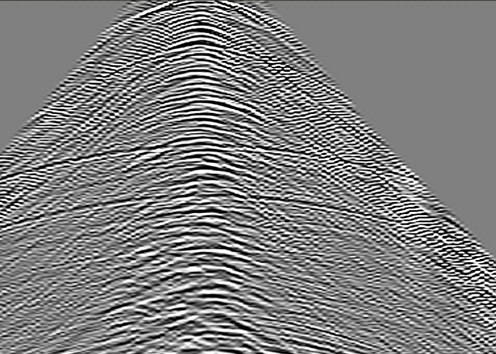
OBN particle-velocity data: before Reveal ML
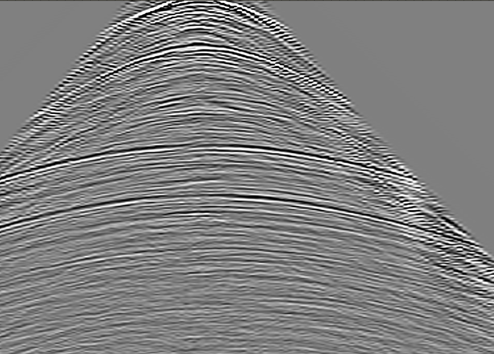
OBN particle-velocity data: after Reveal ML
There's more coming with Reveal 8 this November, when we open up the toolbox further through our software development kit and new capabilities. It's a significant step, and we'll have more to share as we get closer. We may even have some secrets up our sleeve for releases beyond Reveal 8.
This is machine learning built the way we build everything at Shearwater: useful and robust first, open where it should be, and honest about what it does.
Related articles
Reveal
Reveal delivers faster, more energy-efficient seismic workloads on the Arm-based NVIDIA Grace Hopper platform
From legacy to leadership: Morecambe Net Zero unlocked
